Hypothyroidism (or underactive thyroidism) happens when the thyroid doesn’t make enough thyroid hormone. Initially this doesn’t cause too much of an issue, however over time it can lead to serious health issues, such as high cholesterol and heart issues.
Hypothyroidism can develop due to a variety of factors including: Hashimoto’s Disease, thyroid surgery, an iodine deficiency, certain medications and radiation treatment to the neck.
Significantly more women than men have thyroid issues, in fact around 10 percent of American women have hypothyroidism by the time they’re 50 years old and this only increases as we age.

Hypothyroidism and Back Pain- A special Mention
The muscle soreness and joint pain associated with the condition can mean many sufferers also experience lower back and pelvic pain.
Studies in the US has shown that around half of low back pain patients in pain clinics have thyroid problems and many patients find relief once they are treated with thyroid medications.
Should I Workout if I have Hypothyroidism?
In short yes, a BIG yes!
Regular exercise helps us sleep better, it reduces stress, maintains muscle, and boosts mood, and energy levels. In addition, its especially good for women with hypothyroidism as it increases our metabolism, which helps to control weight gain, plus increases bone density and lowers the risk of heart disease.
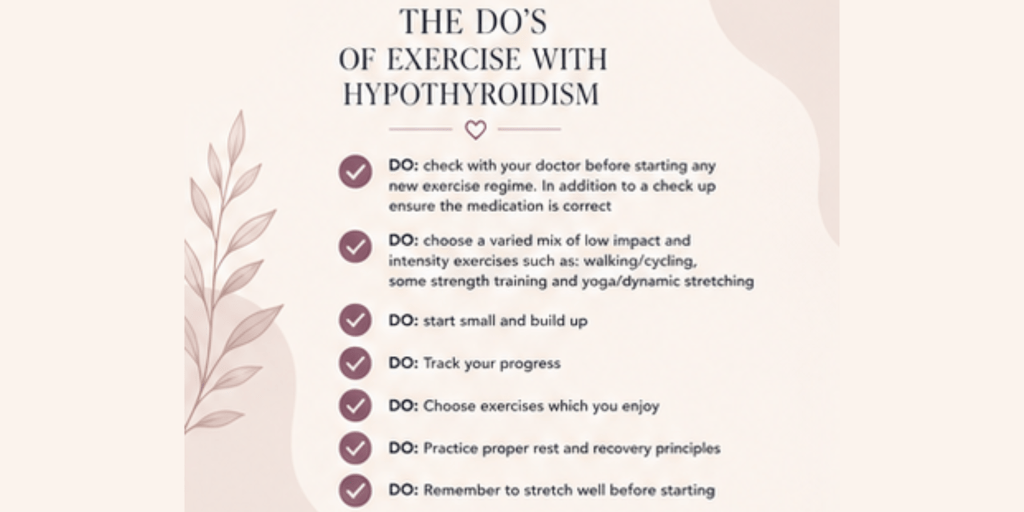
The Do’s of Exercise and Working Out with Hypothyroidism
These exercises help improve cardiac fitness plus build a stronger, more athletic body.
Walking: A great outdoor mood boosting activity which can burn up to 280 calories per hour. Try and stay in your heart zone 2 for a max fat burn, and if it becomes too easy consider a weighted vest or treadmill incline.
Cycling: Whether you choose outdoor or static, cycling offers great cardio workout with strength and stamina benefits- all the while supporting your joints.
Swimming/Water based exercise: Water offers both support and resistance in one cooling exercise. Now we’re heading into summer, consider adding swimming as a cardio option.
Strength Training
The best way to increase a metabolism being driven down by hypothyroidism is to add regular weight training to your workouts. The more muscle you can build and maintain, the better your body will be able to fight weight gain, reduce the risk of heart disease and stave off other metabolic diseases such as diabetes etc.
Consider employing a personal trainer to help you with your form and programming. For this you can use traditional weights, and /or machines, plus body weight exercises, resistance bands and yoga balls. Strength training can be as basic or high tech as you want- just make sure your doing it correctly and you have a plan for progression.
Mobility and Flexibility
Those with hypothyroidism are also recommended to participate in regular mobility and flexibility workouts, like yoga, Pilates and tai-chi.
These exercises help improve blood flow to the thyroid, help control breathing and stress levels plus improve and strengthen the core and pelvis- allowing for better posture, balance and reducing back pain.
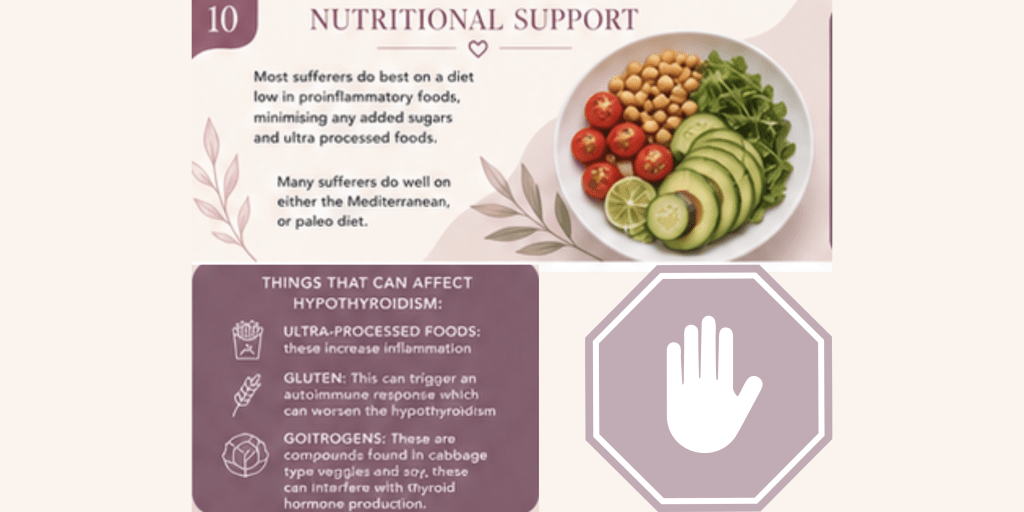
Nutritional Support for Hypothyroidism